Creating Investment Solutions - We’re delighted to announce that the Bloomberg Artificial Intelligence (AI) Bond 4 matured on the 09th of February 2026, delivering an impressive gross return of 22.50% over 18 months — equivalent to 15.00% per annum. Click here for further details. Over the past five years, our 51 maturities have generated a total gross return of €39.8 million for our clients, achieving an average annual return of 11.35% over an average term of 22 months.

WEEKLY MARKET REVIEW

Stay Informed with Our Seaspray Private Weekly Financial Market Review

Get the latest insights on global financial markets with our Weekly Market Review. In it we discuss the key financial headlines from the U.S, Europe, UK, Ireland, and Asia-Pacific, along with in-depth analysis of major asset classes, including:

Equities – U.S, Europe, and UK market trends
Bonds – Interest rate movements and fixed-income insights
Commodities – Oil, gold, and other key market drivers

Stay ahead of market trends with our expert insights. Read the latest update now!

Weekly Market Review: 30th March 2026

The Week in Numbers

Equity Markets

Equity IndicesValueWeekly ChangeYTD Change
S&P 5006,368.85-3.63%-6.96%
NASDAQ20,948.36-4.87%-9.87%
EuroStoxx505,505.80+1.68%-4.93%
EuroStoxx600575.30+1.86%-2.85%
FTSE 1009,967.35+1.83%+0.36%
ISEQ11,975.33+2.64%-8.58%

Central Bank Interest Rates

Interest RateCurrent RateDirectionRate Change
FED3.75%0
ECB2.15%0
BOE3.75%0

Government Bonds

Fixed IncomeYieldWeekly ChangeYTD Change
US 10YR4.44+1.09%+6.91%
US 2YR3.91+0.56%+12.89%
German 10YR3.098+1.99%+8.25%
UK 10YR3.36+0.56%+11.12%
Irish 10YR4.97-0.46%+11.18%

Foreign Exchange Currency Movements

FXValueWeekly ChangeYTD Change
EUR/USD1.150-0.23%-2.02%
EUR/GBP0.867+0.23%-0.45%
GBP/USD1.325-0.33%-1.60%

Key Events

  • 01/04/2026 – US Retail Sales and Manufacturing Data
  • 03/04/2026 – US Non Farm Payrolls
ASML and the Oil Supply Web: Understanding Two Critical Global Systems
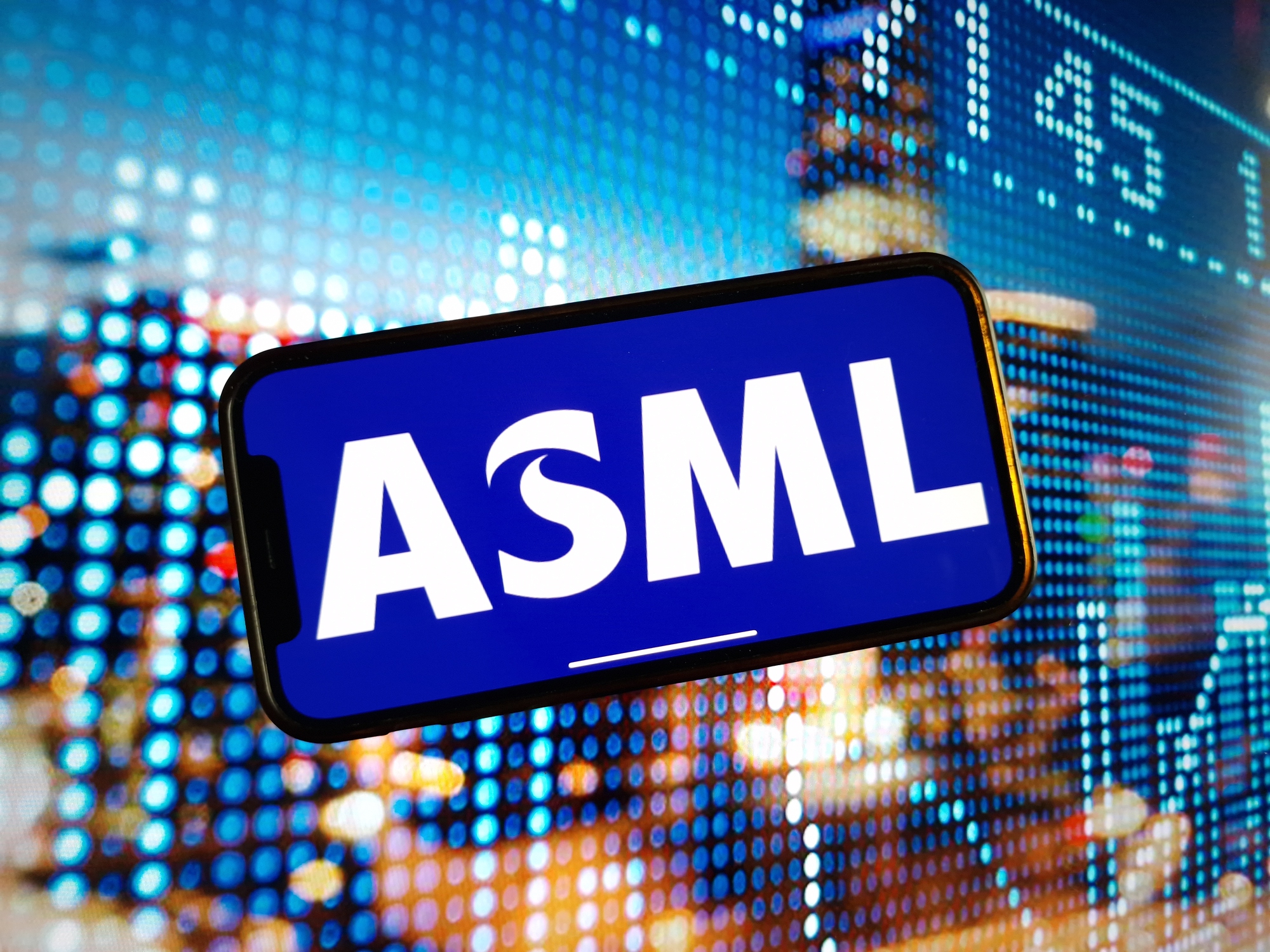
In our latest Seaspray Private financial data insight, we examine ASML, the Dutch semiconductor technology company at the centre of global chip manufacturing. As the world’s only producer of extreme ultraviolet (EUV) lithography machines, ASML plays a critical role in enabling advanced semiconductor production and supporting the rapid expansion of artificial intelligence. We also highlight the deep links between global energy markets and modern industry, where oil and gas serve as essential inputs across a wide range of supply chains, from plastics and electronics to fertilisers and food production.

Stay Informed with Our Seaspray Private Weekly Financial Market Review

Get the latest insights on global financial markets with our Weekly Market Review. In it we discuss the key financial headlines from the U.S, Europe, UK, Ireland, and Asia-Pacific, along with in-depth analysis of major asset classes, including:

Equities – U.S, Europe, and UK market trends
Bonds – Interest rate movements and fixed-income insights
Commodities – Oil, gold, and other key market drivers

Stay ahead of market trends with our expert insights. Read the latest update now!

FINANCIAL HEADLINES

United States

The OECD, one of the world’s largest economic think tanks, last week forecast that the conflict in the Middle East will have a significant impact on the short-term outlook for the US economy. Inflation is expected to accelerate to at least 4.2% for the full year 2026, which is 1.2 percentage points higher than projected in the OECD’s December 2026 outlook. This would represent the highest projected inflation rate among the G7 nations. However, the OECD does not anticipate a decline in US growth in 2026 despite the potential surge in inflation. This reflects continued increases in AI-related capital expenditure, as well as the overall strength of the US stock market. On the downside however, lower consumer spending throughout the remainder of 2026, driven by higher prices, may weigh on growth, given that it is the largest contributor to US GDP.

Elsewhere, the trade deal previously agreed between the US and the EU was approved by the European Parliament last week, having been delayed due to President Trump’s Greenland-related threats. This now paves the way for formal ratification by Brussels.

Europe & UK

In Europe, the bloc signed a historic agreement last week with Australia covering both trade and defence. Under the terms of the deal, Australian exports to the EU will receive 98% duty-free access, while EU goods will benefit from the removal of over 99% of tariffs. The agreement will also facilitate European investment in mining and critical minerals in Australia, providing access to resources essential for modern manufacturing. Exports from the EU are expected to increase by approximately one-third over the next decade, while tariff elimination could generate savings of up to €1 billion.

In the United Kingdom, the inflation rate for February remained stable at 3%, suggesting that price pressures had been on course to remain contained prior to the outbreak of the Middle East conflict. This data is now of limited relevance, as the March figures are expected to reflect the economic impact of the conflict on the UK economy.

Ireland

The Central Statistics Office (CSO) last week released Ireland’s trade data for 2024, outlining the country’s exports and imports over the year. Overall, Ireland exported goods worth €223 billion and imported €134 billion, resulting in the largest goods surplus in the State’s history. In terms of exports, meat and poultry were the leading categories, valued at €3.9 billion, followed by butter and cheese at €3 billion, and whiskey at €954 million. The country’s largest import category was fruit and nuts, worth €563 million and accounting for 347,000 tonnes. Finally, the United States was Ireland’s single largest trading partner, with exports totalling €73.5 billion and imports amounting to €23 billion.

Asia-Pacific

In China, some of the country’s leading battery manufacturers have benefited from the conflict in Iran and the Middle East, due to heightened concerns about global energy supplies. Shares in battery companies such as CATL, BYD and Sungrow have risen more sharply than those of major oil companies such as Chevron and BP. China has invested more in renewable energy than any other country and currently accounts for approximately 40% of global wind and solar capacity. With energy security becoming an increasing concern, particularly as the growth of AI places greater demands on power grids, these battery companies are well positioned to benefit as the global transition towards renewable energy accelerates.

ASSET CLASS REVIEW

Equities

In the United States, it was a volatile trading week, with market sentiment largely driven by developments in the conflict in Iran. While Monday initially appeared set to be another negative session, a post from President Trump on his social media platform Truth Social, stating that the US and Iran were working towards a ceasefire, sent equity markets sharply higher. Both the S&P 500 and NASDAQ Composite gained over 1% on the day as a result. However, as Iran and Israel continued to exchange missile strikes, uncertainty returned to markets and weighed on equity indices. President Trump’s remarks indicating he had stepped back from earlier threats targeting Iranian energy infrastructure provided some support to sentiment while negotiations were ongoing. Nevertheless, rising oil prices on Thursday, following a three-day decline, brought the rally to an end, with both the S&P 500 and NASDAQ falling by more than 0.5%. AI-related stocks were among the hardest hit, as higher energy prices are expected to increase the operating costs of hyperscale data centres. Overall, it was a turbulent week for US equities, with the S&P 500 and NASDAQ closing -3.63% and -4.87% lower.

In corporate developments, Berkshire Hathaway announced that it had acquired a stake in Tokio Marine, one of Japan’s largest non-life insurers. The $1.8 billion investment will see Berkshire—now led operationally by Greg Abel—acquire a 2.5% stake in the business, while also reinsuring a portion of Tokio Marine’s policies and collaborating on future M&A opportunities. This marks Berkshire’s second major investment in Japan, following earlier investments coordinated by Warren Buffett in trading houses such as Mitsubishi Corporation, Itochu Corporation and Mitsui & Co. Elsewhere, in the pharmaceutical sector, Merck & Co. agreed to acquire Terns Pharmaceuticals in a deal valued at $5.7 billion. Merck is the developer of the oncology drug Keytruda, which is used in the treatment of various cancers, including lymphoma and melanoma. However, the drug’s patent is due to expire in 2028, which is expected to negatively impact revenues. As a result, Merck has embarked on an acquisition strategy, with Terns representing its latest addition. Terns is developing treatments for rare blood and bone cancers caused by genetic mutations, with its lead candidate, TERN-701, expected to enter late-stage trials in late 2026 or early 2027.

In technology, Apple Inc. announced that it will add four US manufacturing companies to its American Manufacturing Program, aimed at expanding domestic production of key components. The $400 million initiative, which runs through 2030, will involve companies such as Bosch and Cirrus Logic developing sensors and integrated circuits. Bosch will also partner with Apple and TSMC to produce sensor-related chips at TSMC’s facility in Washington State.

In Europe, markets rose strongly in the early part of last week, as hopes of de-escalation in the Middle East eased concerns around inflation and interest rates. The Euro Stoxx 50 and STOXX Europe 600 both recorded gains of close to 2% by Wednesday. However, much of these gains were reversed on Thursday amid a sharp sell-off, as renewed uncertainty in the Middle East weighed on market sentiment. For the week, the Euro Stoxx 50 and STOXX Europe 600 closed higher, up 1.68% and 1.86%, respectively, aided by the significant rally on Monday which offset the midweek declines.

In corporate developments, Danone announced that it had acquired UK-based nutrition brand Huel in a deal valued at close to €1 billion. The acquisition reflects Danone’s continued expansion into the fast-growing active nutrition segment, driven by increasing consumer focus on health and wellness. Huel has gained significant popularity among younger professionals, supported in part by promotion through media such as The Overlap. The company will continue to operate independently while reporting into Danone. Elsewhere, SK Hynix, a leading producer of high-bandwidth memory (HBM) chips, agreed to purchase nearly $8 billion worth of extreme ultraviolet lithography equipment from ASML. This represents the largest single customer order in ASML’s history and highlights its critical role in the global semiconductor supply chain. Finally, Ferrari has resorted to transporting customised supercars to high-net-worth clients in the Middle East via cargo aircraft, as standard delivery routes have been disrupted by the conflict. Air transport can cost four to five times more than sea freight; however, strong demand has led customers to absorb the premium.

In the United Kingdom, the FTSE 100 rose earlier in the week as optimism around a potential de-escalation in Iran supported market sentiment, even as oil majors were pressured by falling oil prices. The heavy weighting of companies such as Shell plc and BP limited gains relative to European peers, although the index still rose by over 1% before Thursday. These gains were subsequently reversed as uncertainty increased regarding the likelihood of US–Iran negotiations. Despite declines between Wednesday and Friday, the rally on Monday was enough for the FTSE 100 to close 1.83% higher for the week.

Bonds

Global bond yields remained elevated last week, although, like other asset classes, they were volatile. The US 10yr yield rose to as high as 4.44% on Monday morning before falling sharply to 4.32% within minutes following a post by Donald Trump regarding negotiations with Iran. Yields traded within a range of 4.32% to 4.44% for the remainder of the week, as markets continued to assess the impact of the conflict in Iran on global inflation. However, markets do not currently expect the Federal Reserve to raise interest rates in 2026. In the United Kingdom, the 10yr gilt yield briefly exceeded 5%, as markets increasingly price in the possibility of a rate increase in the coming months to counter expected inflation.

Commodities

Oil prices were highly volatile in another extraordinary week of trading. Brent crude prices stood at $113 on Monday morning before falling sharply to as low as $96 per barrel by 2:30 p.m., coinciding with the opening of US equity markets. This set the tone for an exceptionally volatile week. As the Trump administration and Tehran continued to issue conflicting statements, prices moved higher towards the latter part of the week, with Brent rising to $108 on Thursday afternoon. Iran’s response to the US 15-point peace plan further heightened concerns, as it included demands for sovereignty over the Strait of Hormuz—a critical shipping route that the US has sought to secure. The Pentagon also ordered the deployment of additional Marines to the region mid-week, with Kharg Island identified as a potential location for a ground offensive aimed at reopening the Strait of Hormuz. However, the likelihood of such action remains low.

In metals markets, gold and silver continued to decline, as expectations of interest rate cuts in the US and elsewhere faded while the Middle East conflict persisted. Gold prices fell to as low as $4,140 before recovering to $4,495 per ounce on Friday, while silver traded within a range of $61 to $69 per ounce for the week.

MORE INSIGHTS